

The future is...
Where is Mystic Meg when we need her?

[This post was inspired by the prompt ‘I remember’, set during today’s Lunch Writing session, held by Stevie Mackenzie-Smith]
I remember a time when the world felt light, and full of possibilities. I remember feeling invigorated and excited by the future; by the infinite potential within me and around me. Yes, there was sadness, and fear, and anxiety, but it felt manageable, easy to handle - a slim paperback you could carry with one hand rather than the dense, weighty tome of worry we all seem to be burdened with these days. The days, weeks and years felt long, with endless reams of time lying ahead, ready to be explored and experienced. But now, months pass by in the blink of an eye. Years seem to be disappearing before they’ve even begun. The clear distinction of the four seasons, which helped to mark out the phases of the year, seem to have blurred into two phases of the year - extreme hot, or extreme cold. Cheers, global warming.
I’ve been reading a lot about this idea that, as a society, the way we experience time and memory has changed. Many of us can’t picture ourselves in the future the way we have been able to before. I’ve never been one for ‘five year plans’, or someone who dreamt of future weddings or family, but I definitely remember being able to imagine myself in the future - whether that was a job I saw myself doing, or other non-work related things I wanted to experience. But, not so much now.
Memory-less
During COVID, routines unravelled, as many of us were forced to stay at home and abandon our ‘normal’ ways of living. The line between work and home life became hair-thin, as our dining tables became our office, and our commute condensed to a walk downstairs. Our sense of time shifted, as we were no longer marking its passing by monitoring a calendar - our calendars were empty, defunct. We began to mark time through minute changes to our routine, such as the hour of outdoor exercise time we were allowed. As a result of this lack of stimulation, many of us can’t bring to mind any distinct memories during this time; not just because there wasn’t really a lot going on, but because we can’t clearly remember that period of time.
Our brains have also been permanently altered by the modern age and the vast expanse of digital stimuli they receive. Neuroscientists at the University of Sussex found that time feels faster when our senses are overwhelmed with information (e.g., social media scrolling) because the brain processes fewer, distinct, meaningful, and deeply encoded memories. Doomscrolling is effectively robbing us of time.
Where has the future gone?
As well as this changing perception of time, I’ve also been finding it increasingly hard to think about the future. I try to imagine where I think I’ll be in one, five, or ten years time, and it feels impossible to comprehend. I started to worry it was because I’m too pessimistic, or not ambitious enough. But then I started to read more and more articles from people who felt the exact same way. Recent and current events have left many of us feeling stuck in limbo, unable to see a clear path ahead, or not confident enough in what’s coming to plan for the future. Bad news feels relentless; our attention is constantly being diverted to yet another scandal, crisis or disaster. From a global pandemic and environmental insecurity, to political unrest and the threat of AI, there is a LOT of shit to be thinking about at any given moment, regardless of whether you’re engaged with current affairs or not. You cannot avoid hearing or reading about at least one of the terrible things happening. This piling up of different crises has been referred to as ‘polycrisis’ by social scientists, and can be attributed to the sense of radical uncertainty many of us are feeling.
According to Dr Hal Hershfield, a psychologist and professor of marketing and behavioral decision-making at UCLA, “we rely on the idea of a stable, continuous future self to help us understand the present and to achieve a sense of greater purpose, making it easier to plan and make decisions”. We depend on the thought that our future will resemble the present, and we use our knowledge of the now to shape our idea of what’s coming next. So, when we are facing so many unknowns across all areas of society, is it any wonder we can’t picture ourselves in 12 months time?
Fighting for the future
So, many of us agree that planning for the future seems a bit tricky, futile even, at the moment. But, difficult as it might feel to think ahead, being excited about the future and what’s next is key to finding happiness in the present. I know I fare much better getting through tricky times at work, or periods when my depression peaks, when I actively make plans and have things to look forward to. It’s the ‘light at the end of the tunnel’ idea; we can propel ourselves along through shitty times because we know that once we are through it, better things are there to meet us.
I think the key is not to be too aspirational with it. Throw the five-year plan in the bin, because who really knows what state the world will be in by then. Instead, focus on the little, incremental things you can work towards or focus on. For me, that’s passing my driving test this year (Lord, please), and dedicating more time to writing. I’m also making sure to have lots of lovely things in the social calendar; monthly book club meets, trips to the theatre, date nights - all within the next three-six months so I don’t get too caught up in thinking so far ahead I get overwhelmed.
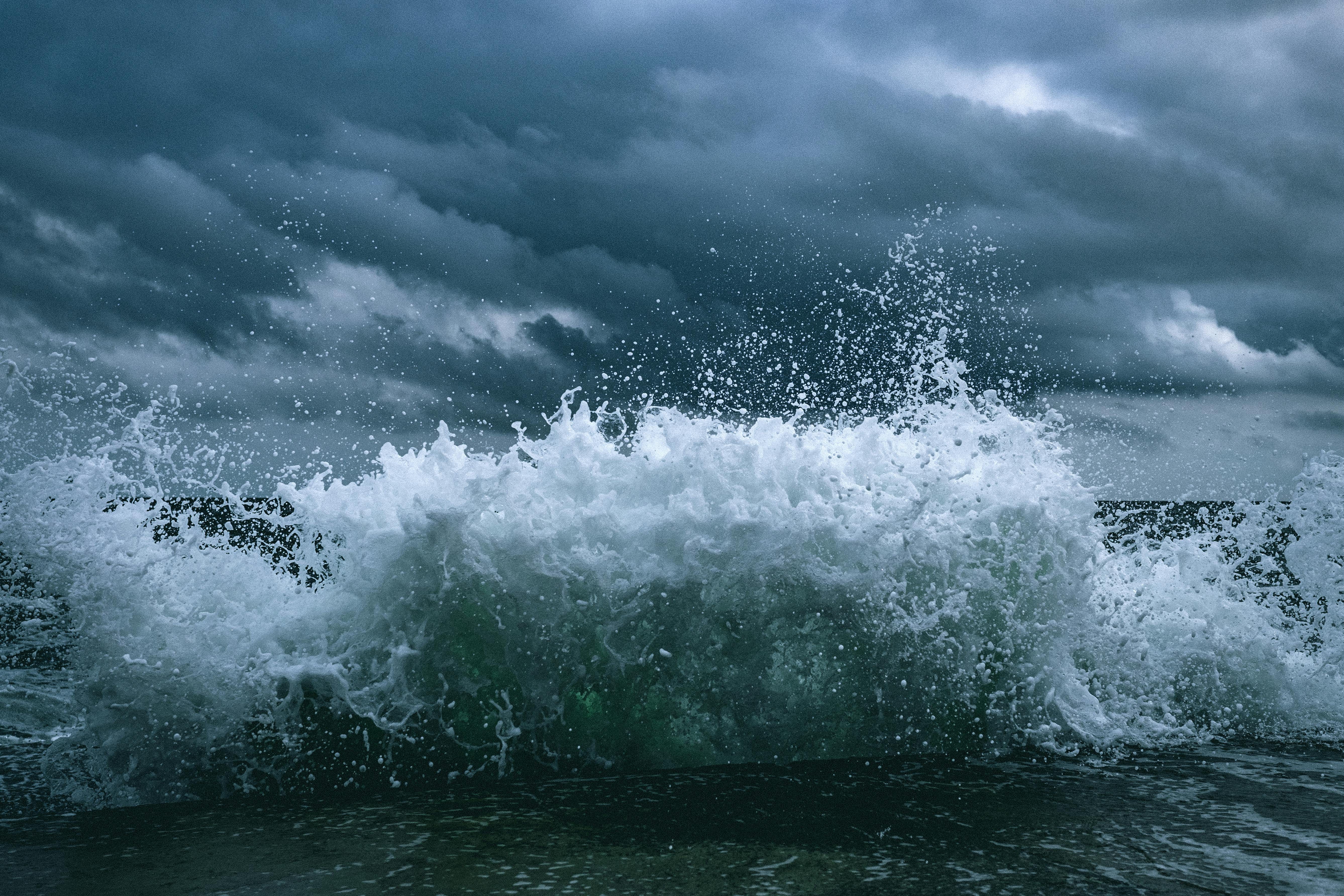
We’re all in the same boat, battling against some bloody big waves right now. The waters are choppy, and the idea of calmer conditions seems like a pipe dream. But we’re riding the waves together, and if we focus on just getting through the next swell, I think we’ll be OK.
You might also enjoy…
Feeding the soul - On how we’re retreating to our inboxes to find authentic content
The great escape - On the cultural trend of “quiet” everything
Recrudescence - The return of something terrible after a time of reprieve